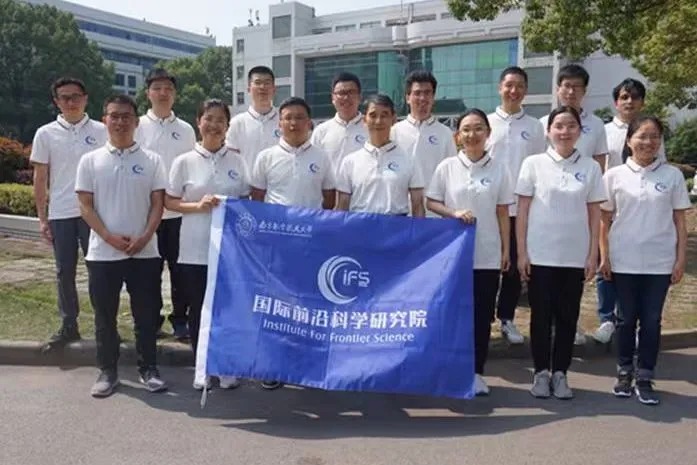
"A research team led by Academician Guo Wanlin and Professor Liu Yanpeng from Nanjing University of Aeronautics and Astronautics (NUAA) has engineered a new graphene/hexagonal boron nitride sliding ferroelectric transistor. Published in Nature Electronics, the device offers a promising solution for next-generation low-power, highly integrated AI hardware."
A research team led by Academician Guo Wanlin and Professor Liu Yanpeng from Nanjing University of Aeronautics and Astronautics (NUAA) has engineered a new type of sliding ferroelectric transistor that presents a promising solution for the development of next-generation low-power, highly integrated AI hardware.
The findings were recently published in the leading international journal Nature Electronics.
The challenge
Efficient coordination between data storage and computation is essential for real-world artificial intelligence applications. Conventional chip architectures require frequent data exchanges between storage and processing units, which increases both latency and energy consumption.
Ferroelectric materials, which can retain data without a continuous power supply, are considered ideal for low-energy chips. However, traditional ferroelectric devices face challenges in managing the massive and complex datasets required for deep learning, which restricts their utility in integrated memory-computing systems.
The breakthrough
To overcome these limitations, Guo’s team dedicated four years to the development of a graphene/hexagonal boron nitride sliding ferroelectric transistor. The device significantly pushes the performance limits of ferroelectric components, facilitating synchronized storage and computation through an advanced dual-dimensional regulation mechanism.
In terms of application, the device demonstrates long-term stability of over 10 years and strong cycling endurance, making it suitable for practical deployment.
Potential applications
The research team pointed out that sliding ferroelectric transistors could play a key role in future edge computing, the internet of things and neuromorphic chips. These transistors could enable terminal devices to perform more complex data processing with lower power consumption, while also offering new solutions to reduce energy use in data centers.
Outlook
With further technological refinement and engineering advancement, this breakthrough is expected to inject new momentum into the development of next-generation intelligent chips, underscoring the university’s ongoing commitment to innovation in advanced electronic devices and smart hardware.
"